The old Tropicana site is now the largest construction project on the Las Vegas Strip, and I get asked about it constantly — usually some version of “should I buy near the ballpark before it opens?” This post covers what is actually being built and on what timeline, and then does something most posts on this topic skip: it looks at what the research actually says about buying a home near a new stadium. The honest answer is more complicated than the hype.
What's Actually Being Built
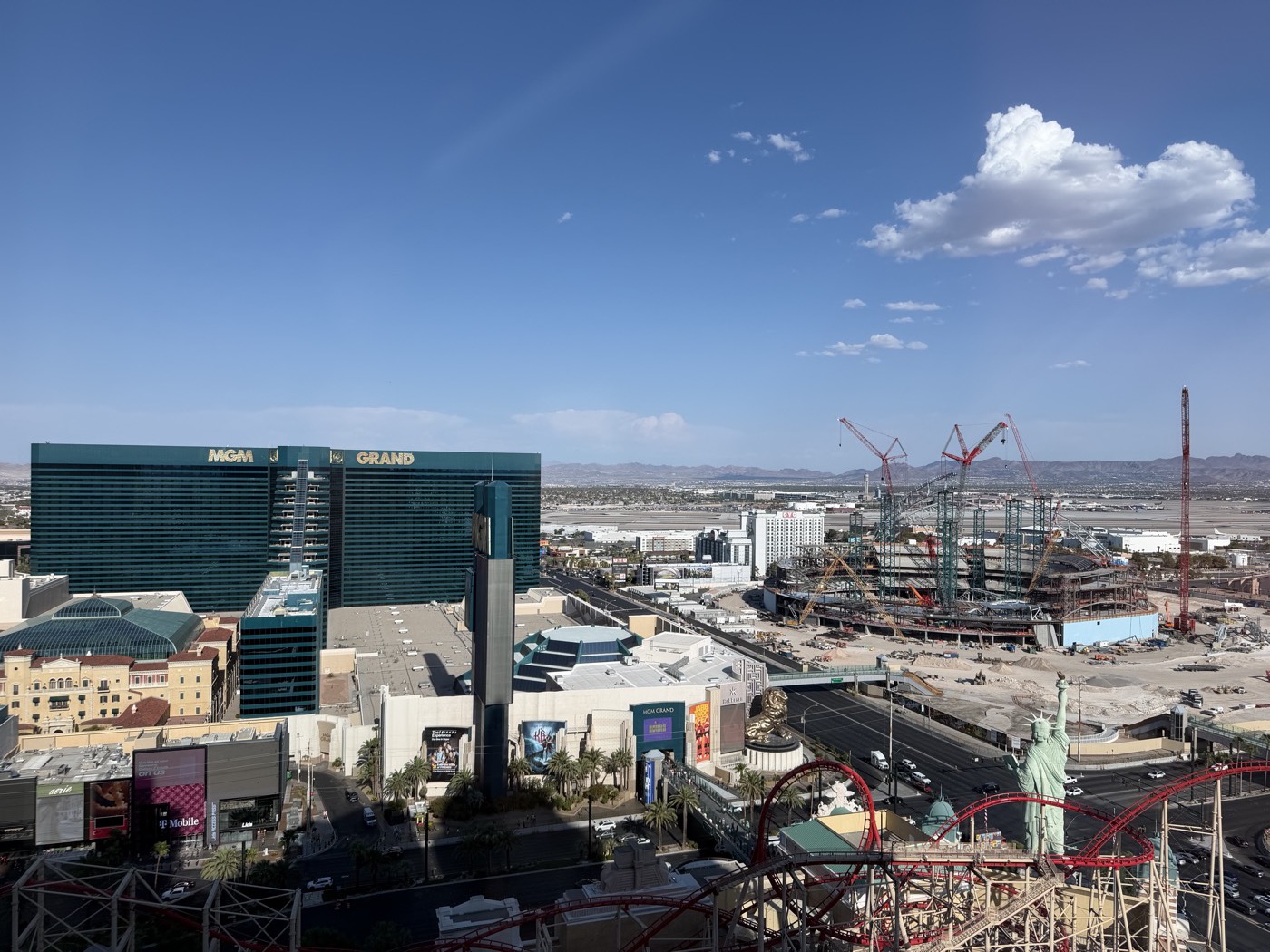
Two separate projects are going up on the same 35-acre campus at Tropicana Avenue and Las Vegas Boulevard, on the site of the demolished Tropicana resort.
The first is the Las Vegas Athletics ballpark — a roughly $2 billion, 33,000-seat venue that broke ground in June 2025 and is targeting its first home games in April 2028. As of mid-2026 the project has been reported as on time and on budget, with more than $300 million spent. Construction went vertical in the spring, all of the bowl steel was completed in about three months, and in June 2026 the first of six trusses for the fully enclosing roof was raised.
The second is Bally's Las Vegas, a proposed $3 billion integrated resort sharing that campus. As announced, it includes two hotel towers with about 3,000 rooms, roughly 500,000 square feet of retail, dining, and entertainment, a casino, a 2,500-seat entertainment venue, and VIP access directly into the ballpark. Parts of it are intended to open before the A's first pitch in 2028.
The ballpark is under construction. The resort is still a plan. The stadium has steel in the air and a public opening date. The Bally's resort was submitted for Clark County entitlements — meaning the approvals that determine what can legally be built on a parcel and at what scale. Announced resort projects on the Strip have been revised, delayed, and shelved before. Treat the ballpark as near-certain and the surrounding resort build-out as likely-but-not-guaranteed.
What the Research Says About Buying Near a Stadium
This is the part worth slowing down on, because the intuitive answer — big investment nearby, therefore my home appreciates — is not what the academic literature consistently finds.
Some studies do find a lift. Research published in the Journal of Sports Economics found home values near major U.S. sports stadiums rose roughly 4.7% on average, with rents rising more sharply in close proximity in some cases.
But the case studies cut both ways. A study of FedEx Field outside Washington, D.C. found nearby properties actually sold at a discount, which narrowed only after the stadium was finished. A difference-in-differences study of more than 17,000 apartment transactions around a new Japanese baseball stadium found prices within two kilometers depreciated by up to about 7% after it opened. Research on Seattle's MLS stadium likewise found condominium values within about a mile declined.
The pattern researchers keep landing on is that effects decay with distance, and that proximity is a double-edged thing. Close enough to walk to games is an amenity. Close enough to absorb the traffic, parking spillover, noise, and event-night congestion is a cost. Which one dominates depends on the specific street, not the metro.
What This Means for the Las Vegas Valley
Here's the practical translation for the way people actually buy homes here.
Almost nobody buying a home is buying “near the ballpark.” The stadium sits in the middle of the Strip's resort corridor. That's a commercial and tourism district, not a residential neighborhood. The valley's mid-tier and luxury housing — Summerlin, Henderson, and the wider Las Vegas metro — is a fifteen- to thirty-minute drive away, well outside the one-mile band where the research finds measurable effects in either direction.
The real story is jobs, not proximity. A $2 billion stadium plus a $3 billion resort is a substantial and sustained addition to construction employment now, and to hospitality employment later. That kind of payroll growth supports valley-wide housing demand broadly. It is a slow, diffuse tailwind — not a reason to expect a specific ZIP code to jump.
Condo and high-rise buyers should look closest. If you're shopping Strip-adjacent condos or high-rises, you're the one buyer segment genuinely inside the zone where this matters. Ask specifically about event-night traffic routing, parking rules, and construction noise through 2028 — and factor a couple more years of active building into how you'd actually live there.
- Entitlements
- The land-use approvals a local government (here, Clark County) grants for what may be built on a parcel — use, height, density, and design. A project without entitlements is a proposal, not a project.
- Difference-in-differences
- A research method that compares how prices changed near a new stadium against how they changed in a similar area without one, to separate the stadium's effect from the general market.
- Short-term rental (STR) permit
- Las Vegas Valley jurisdictions and HOAs separately regulate short-term rentals, and rules differ by city and community. If your plan involves renting to visitors on game weekends, confirm the rules for that specific address first — they change.
Don't pay a premium today for appreciation promised in 2028. If a listing is priced on stadium proximity, you may be pre-paying for a benefit the research says is uncertain and highly street-specific. Buy the home on its own merits and treat any corridor upside as a bonus.
Verify STR rules before you count on game-weekend rental income. This is the single most common assumption I have to correct. Permit rules and HOA leasing restrictions are separate hurdles, and both must clear.
Ask what the drive actually looks like on an event night. Tropicana and Las Vegas Boulevard already carry heavy resort traffic. Eighty-one home games a year change the commute math for some south-valley routes. Drive it before you commit.
Keep the tax questions with a CPA. Nevada's lack of a state income tax is a real factor in relocation math, but how it applies to you depends on residency facts I can't assess as a broker. Worth a conversation before you buy, not after.
Thinking About the Corridor?
Tell me what you're weighing and I'll give you a straight read on whether the area actually fits what you're trying to do — including when the answer is no.
I read and reply to every message myself, within one business day. Prefer plain email? show email address (new inquiries get a faster reply through the form).
Construction details and project figures are drawn from public reporting current as of mid-2026 and will change as the projects progress — see the Las Vegas Review-Journal, Ballpark Digest, and Bally's Corporation's own announcement. Stadium and property-value findings are summarized from published academic research, including work in the Journal of Sports Economics and the FedEx Field study in Land Economics. Confirm current project status and comps before making a purchase decision.